Author: Mr Dingaan Booi, Officer International Relations: Strategic, Initiatives and Partnerships, Cape Peninsula University of Technology

The ongoing discourse around partnerships in African higher education underscores a pivotal moment in the sector’s evolution. The ANIE thematic session, Africa Higher Education Partnerships through the Lenses of Transformation, Leadership, and Development sister organisation of International Education Association of South Africa (IEASA), provided a platform for exploring how intra-continental collaborations can foster meaningful transformation, rooted in African values and aspirations. Central to the discussions was a call to embrace an Afrocentric approach, one that celebrates the continent’s cultural and intellectual wealth while addressing the persistent challenges that constrain its higher education landscape.

Among these challenges, the reliance on external funding emerged as a significant concern. African institutions frequently depend on international financial support, which, while beneficial in the short term, can compromise the autonomy needed to prioritise local and regional needs. This dynamic often leads to partnerships that serve external interests more than those of the continent. Compounding this issue are infrastructural deficiencies, uneven resource distribution, and a lack of coordination across institutions, all of which inhibit sustainable growth and innovation.

The session also highlighted a pressing need for greater academic capacity, particularly in research supervision and mentorship. Highlighting the failure to catalyse on their own, those on the continent with high-quality capacity and research as well as those abroad. This gap, coupled with limited strategic focus on internationalisation, often marginalises the potential of African higher education to assert itself on the global stage. Leadership emerged as a recurring theme, with participants emphasising the need for leaders who can align institutional priorities with a broader Afrocentric vision of collaboration and development.

Leadership in this context must move beyond traditional paradigms to embrace a model that is reflective of Africa’s unique strengths and challenges. Central to this is the recognition of the immense value within the African diaspora. Scholars and professionals abroad represent a reservoir of expertise and networks that can enrich local institutions and foster reciprocal partnerships. Partnerships with Historically Black Colleges and Universities (HBCUs) also present a unique opportunity to build on shared histories and values, amplifying the global impact of African higher education.

The discussions called for a cohesive strategy that embeds internationalisation at the core of institutional frameworks. This requires not only structural reforms, such as centralising internationalisation efforts and ensuring strategic oversight, but also a cultural shift in how partnerships are approached. Resource sharing, technology integration, and collaboration across institutions were proposed as practical steps to enhance teaching, learning, and research. Such initiatives align with the broader objective of creating a unified and purpose-driven African higher education landscape.

Moreover, the importance of rethinking educational models was emphasised. African institutions must develop frameworks that prioritise problem-solving approaches, equipping graduates with the skills to address the continent’s pressing challenges. This focus on applied knowledge and innovation is essential for ensuring that higher education remains a driver of sustainable development.

The session highlighted that the potential of African higher education partnerships lies not in replicating external models but in creating something inherently African. By fostering collaborations that respect cultural diversity, leverage indigenous knowledge systems, and promote equitable exchange, the sector can redefine its role within global academia. The opportunity exists to move beyond fragmented and externally driven collaborations towards partnerships that are transformative, empowering, and reflective of the continent’s aspirations.

This vision for African higher education partnerships is not simply about elevating the continent’s academic standing but about reclaiming agency in shaping its future. Through intentionality, equity, and a commitment to shared progress, Africa’s institutions can lead the way in demonstrating how collaboration can be a force for sustainable transformation, not just for the continent but for the global academic community.

Acknowledgements: Prof Nonceba Mbambo-Kekana (Facilitator), Dr Tasmeera Singh (Facilitator), Mr Dingaan Booi (Moderator), African Partnerships Universities Alliance and ANIE (the African Network for Internationalization of Education (ANIE)) thematic session, Africa Higher Education Partnerships through the Lenses of Transformation, Leadership, and Development  a

UNESCO Chair team, Stellenbosch University

The UNESCO Chair on Intercultural Competence at Stellenbosch University proudly announces the resounding success of its inaugural intercultural conference, held at Strathmore University, a key partner institution located in Nairobi, Kenya. Held on 9-11 October, the event brought together 56 participants from 12 countries, fostering a vibrant exchange of ideas, experiences and practices.

The conference featured a keynote address by Mr. Milton Nyamadzawo, Director of the Institute for Economics and Peace in Southern Africa, alongside contributions from 19 speakers, including a plenary panel featuring two UNESCO Chairs and university leaders from both Stellenbosch and Strathmore Universities. Participants also enjoyed a film screening and engaged in a special post-conference strategy meeting with Secretary Ogle from the Office of the President of Kenya.

Feedback from attendees highlighted the conference’s impact, with participants describing it as “meaningful,” “connective,” “enriching,” and one even noting, “these are my people!” Key takeaways from the discussions included:

  • The need to learn more about significant local intercultural initiatives driven by individuals who understand their unique contexts.
  • The critical importance of listening for understanding in social relations as well as  the need for intentional development of intercultural competence.
  • The foundational role of narratives in human experiences.
  • The necessity of amplifying the voices of Africa’s youth.
  • The need for more frequent intergenerational dialogues.
  • The value of communities of practice as nurturing hubs for intercultural exchange.

One of the primary goals of the conference is to create a platform for African voices, perspectives, and practices—especially those rooted in pre-colonial traditions—on intercultural topics that promote shared humanity and peaceful coexistence where all thrive.

Looking ahead, the next UNESCO Chair intercultural conference is scheduled to take place in Rabat, Morocco during the last week of September 2025 on 29 Sept-1 Oct. More details will be posted on the Chair website at www.sun.ac.za/english/unescochair-icc/   IEASA colleagues are warmly invited to submit proposals once the call is published.  Features of the 2025 intercultural conference include a special event for youth leaders, a Train-the-Trainer workshop on UNESCO Story Circles, and an intercultural symposium organized by the World Council on Intercultural and Global Competence. 

The UNESCO Chair on Intercultural Competence, based at Stellenbosch University and led by chairholder Dr. Darla K. Deardorff, a renowned expert in the field, focuses on the intersections of intercultural competence with peacebuilding, climate action, and gender equality across Africa and beyond. The Chair’s team includes co-chairs: Dr. Divinia Jithoo and  Dr Precious Simba, Operations Coordinator Werner de Wit, and Intersection leads: Yenziwe Mbuyisa, Sarah Richmond, and Rabia Abba Omar, along with  partner universities across Africa and beyond, including IEASA which is a partner of this UNESCO Chair. Note that the UNESCO Chair is also a partner with the World Council on Intercultural and Global Competence(www.iccglobal.org)  which hosts a virtual ICC in Africa Working Group that all are welcome to join (free).   For more information or to get involved with the work of the Chair, please contact Dr. Darla Deardorff or the team at UNESCO-ICC@sun.ac.za.

Date: 10 – 13 September 2024

Venue: 2Ten Hotel, Sibasa, Thohoyandou

Theme: Building Global Partnerships for Sustainable Development

Reference: https://www.univen.ac.za/news/univen-weekly-e-news-third-edition/

The University of Venda continues to build global partnerships for sustainable development

“The theme for this year’s internationalisation week is ‘Building Global Partnerships for Sustainable Development. This theme emphasizes the importance of collaboration and partnerships across borders to achieve sustainable development goals,” said Vice-Chancellor and Principal, Prof Bernard Nthambeleni, during the official opening of the 2024 Internationalisation Week that took place on Tuesday, 10 September 2024, at 2Ten Hotel, Sibasa.

Prof Nthambeleni continued to mention that this theme aligns with the global focus (SDG#17) on sustainability and cooperation in addressing climate change, health crises, and socio-economic inequalities. He said that in a 2022 study conducted by the British Council and the Association of Commonwealth Universities, it was established that international higher education partnerships are highly effective in supporting progress against all 17 of the UN’s Sustainable Development Goals.

“The study’s outcomes reinforce the view that universities should be recognised as essential actors in the international development space and supported by donors to deliver projects that drive progress towards global goals. Universities here and elsewhere in the continent have multifaceted roles and mandates to lead through the production of Research, Teaching and Learning, and Community Engagement.”

Prof Nthambeleni continued to mention that, as contributors to the knowledge base, we can improve our understanding of global challenges through partnerships and working together to develop practical solutions. “As implementers of new knowledge, partnerships not only conduct research to enrich the knowledge base but also implement their results in practice. However, what is more practical is how we relate to each other as Africans. In 2022, the University of Venda analysed of its partnerships, and found that we only had 7 south-south formal agreements out of a total of 122. Meaning that less than 10% of our agreements were with partners in Sub-Saharan Africa (excluding South Africa).”

He highlighted that we have moved this number to 25 south-south collaborations out of a total of 273. This means that we are still mainly collaborating with partners outside the continent as opposed to partners within the continent.

Prof Nthambeleni concluded his talk by mentioning that if we agree that Africa is generally collaborating with partners outside the region that these partnerships have been traditionally skewed towards the West, and that we as Africa haven’t had the opportunity to structure these partnerships in a way that would ensure that all parties would benefit equally. “Then perhaps we need to look within for solutions and knowledge that would resolve Africa’s challenges in our lifetime.”

When talking about the significance and purpose of this Internationalisation week, Director International Relations and Partnerships, Dr Segun Obadire said that since he joined the International Relations Directorate at UNIVEN in 2011, he has seen tremendous change and improvement in the internationalisation agenda of the University. He mentioned that he believes this is just the beginning; there will be a lot of growth and increase in the activities of academics and researchers  internationally in the future. “This goal cannot be achieved without working with strategic partners in Africa and beyond. The internationalisation Week platform is meant to help in expanding our scope and exploring other opportunities among our partner institutions and others to enhance the quality of education and improve research output at the University.  The participating staff and students are encouraged to make the best use of their time during this meeting to improve their research work and aim at publishing their papers.”  

In his keynote address, Deputy Vice-Chancellor: Academic at the University of Ilorin, Nigeria, Prof Olubunmi Abayomi Omotesho, spoke on the topic of revitalizing global partnerships: collaboration strategies for achieving sustainable development. He said the challenge with Africans is that they tend to feel inferior when they look at their culture. “One thing I like about the Chinese is that they have made progress economically, have also never neglected their culture. The media space is owned by the West, especially the Americans, and they have easily influenced Africans who now believe that their culture is inferior.” 

He mentioned that most people who know a lot about indigenous things don’t document or teach their young ones this knowledge; they die with that knowledge. “They should not die with an important knowledge.  We need to leverage technology to progress in life as Africans. We need to document our things so we can retrieve them later. Knowledge, collaboration, and partnerships must be based on mutual understanding, which should benefit all parties.” 

In his closing remarks and message of support, the Director Research and Innovation, Prof Jabulani Makhubele, said it is through conferences like this that we promote collaborations and develop integrated research for cooperation. 

This Internationalisation Week took place from 10 – 13 September 2024.

Issued by:

Department Marketing, Branding & Communication.

University of Venda

Tel: 082 868 2218 / 082 868 1811

Muhammad Cassim, a second-year student in the Department of Engineering Sciences in the Faculty of Natural and Agricultural Sciences at the University of the Free State, will participate in the winter university project in Pskov, Russia, from 25 November to 9 December 2024.

The winter school aims to strengthen relationships among young engineers and deepen international interaction via skills improvement, joint projects, and social cohesion. The programme boasts a densely packed education block, project block, and cultural block.

Cassim is part of the UFS Grid Related Research Group and actively participates in research centred on complexity science. He intends to complete his BSc Physics degree with Engineering subjects and progress towards postgraduate studies in the UFS Department of Physics.

He is currently working on verifying experimental developments in the field of synchronisation in complex networks.

Muhammad CassimThe department aims to align with the UFS Vision 130 by producing competitive students who can operate in the postgraduate paradigm with the digital themes of veterinary science and ecological engineering science. 

Read more…

Muhammad Cassim, a second-year student in the Department of Engineering Sciences in the Faculty of Natural and Agricultural Sciences.

Date: 18 November 2024

Author: Jacques Maritz

Photo: Supplied

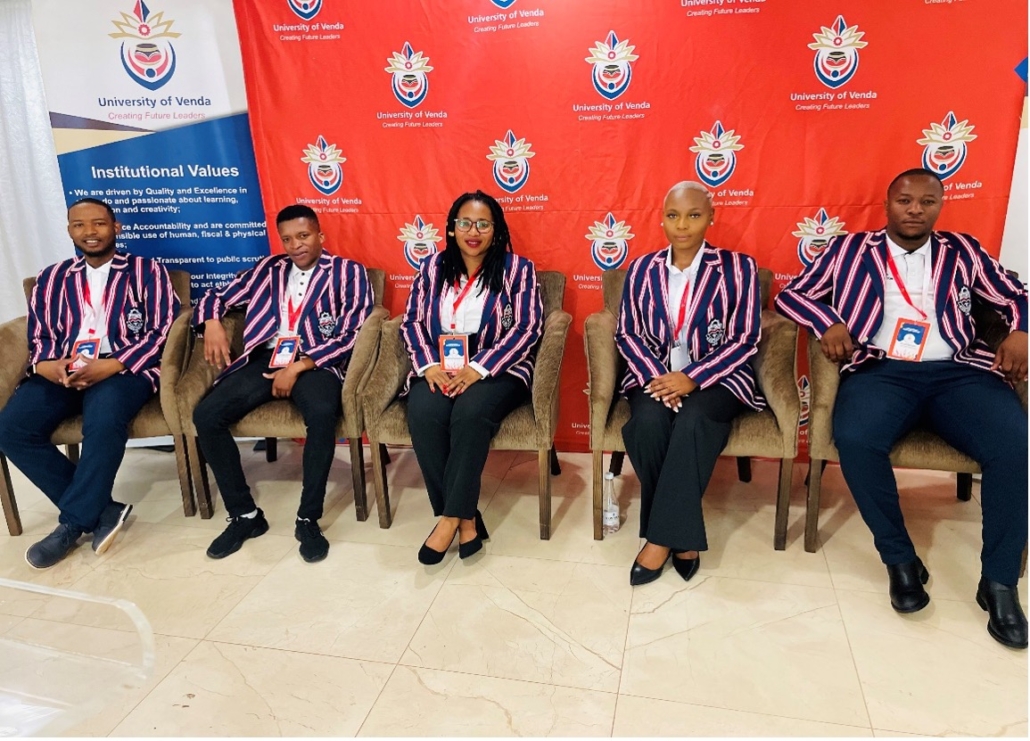
The University of Venda (UNIVEN) recently became a hub of global connection    and inspiration as it hosted its annual Internationalisation Week. With the theme ‘Building Global Partnerships for Sustainable Development’, this gathering brought together bright minds and passionate voices from universities and organisations across Africa and beyond. From 9 to 13 September 2024, the event sparked meaningful conversations about how collaboration can address some of the world’s most pressing challenges.

Walking into the conference, one could feel the energy—an almost tangible buzz of ideas meeting action. Delegates from the University of the Free State (UFS) Office for International Affairs (OIA), the University of Eswatini, Lupane State University, and others gathered to share their expertise and experiences. What stood out wasn’t just the calibre of attendees but also the shared commitment to finding solutions through partnership.

One of the most thought-provoking moments came during a presentation by the OIA’s Mr Kananelo Radimakatso and Mr Bongani Vilakazi who work in the Partnerships, Collaborative Degrees, and Outgoing Mobility portfolio. They explored how data and modelling science could optimise international collaborations, turning theory into impactful strategies. Their work underscored a simple yet powerful truth: when we harness technology and data effectively, we amplify our ability to make meaningful change.

Another highlight came from Ms Seithati Ramonaheng, of the International Students Admin, Immigration and Medical Aid portfolio at the UFS, who delved into the layers of inclusive education systems. Her insights were a heartfelt reminder that inclusivity is not just about access—it’s about creating environments where everyone, regardless of background, feels seen and supported. For Ms Ramonaheng, the focus wasn’t just on what institutions could achieve for international students and staff but on how these efforts could ripple outward, shaping a more equitable world.

Equally captivating was the discussion led by Ms Keabetswe Moeketsi who shed light on South Africa’s influence in shaping global human rights dialogues of international relations between students, staff and higher learning institutions in order to shape a more constitutional world.

A group of people sitting in chairs

Description automatically generatedTo conclude the UFS presentations, Mr Lekiti Rantsane emphasised the importance of friendship through cultural exchanges pioneered in his Internationalisation at Home portfolio. Through the UFS’s Umoja Buddy Programme (UBP), local and international students have found opportunities to connect and grow. Mr Rantsane’s stories of friendships forming across cultures were a testament to the idea that when we open ourselves to others, we unlock incredible potential—not just in our academic journeys but in our shared humanity.

Representatives from the UFS Office for International Affairs (from left to right): Kananelo Radimakatso, Bongani Vilakazi, Seithati Ramonaheng, Keabetswe Moeketsi, Lekiti Rantsane  


As the week drew close, it was clear that UNIVEN’s Internationalisation Week wasn’t just an event but a call to action. The awards presented to the UFS’s delegation further highlighted the importance of this work. Mr Vilakazi and Mr Radimakatso were honoured for their compelling presentation, while Ms Ramonaheng received recognition for her standout abstract. These accolades weren’t just a celebration of individual achievement—they reflected the power of collaboration.

A sense of gratitude and purpose lingered long after the conference ended. It’s one thing to talk about global partnerships, but it’s another to see them in action, shaping conversations and inspiring change. As we move forward, events like this remind us that the path to a sustainable future isn’t a solitary one—it’s a journey we must take together with open minds and a shared commitment to making a difference.

Date: 04 October 2024

Author: UFS Office for International Affairs

Photo: Supplied

The University of the Free State (UFS) has been selected to participate in a high-impact initiative managed and coordinated by the Southern African Research and Innovation Management Association (SARIMA). The SARIMA Visibility Project, which focuses on elevating institutional prominence, aims to enhance the university’s global visibility and strengthen its capacity to secure international grants. By participating in this initiative, the UFS is positioning the Directorate for Research and Development (DRD) to benchmark against other leading Tier 1 institutions, adopting best practices in research management and innovation to fuel future growth.

In the few months since its launch, the SARIMA initiative has already added significant value to the UFS Research Office. The introduction of standardised procedures has not only improved consistency across departments but has also made the office more agile and responsive to the demands of international collaborations. Benchmarking exercises conducted as part of the project have allowed the university to identify key areas for improvement, adopting innovative solutions that further enhance the institution’s research capacity and global visibility.

The SARIMA Visibility Project marks a significant step forward for the university. It is not only a means of raising the institution’s profile, but also a platform for long-term sustainable research excellence. As the UFS continues to benefit from this initiative, it is setting the stage for a future of global recognition and academic achievement that will benefit both the institution and the broader academic community for years to come.

Read more…

The Directorate Research Development at the university proudly participates in the SARIMA Visibility Project, aimed at enhancing its global visibility and research excellence.

Date: 22 November 2024

Author: Leonie Bolleurs

Photo: Stephen Collett

In a significant first for any university in South Africa and the Global South, five students from the University of the Free State (UFS) participated in Coventry University’s prestigious International Audit Week (IAW). This global gathering of top accountancy students from various countries took place from 28 to 30 October 2024 in England.

The UFS School of Accountancy earned the invitation through a Collaborative Online International Learning (COIL) project initiated earlier this year. Prof Frans Prinsloo, Vice-Dean for Learning, Teaching, Innovation, and Digitalisation in the Faculty of Economic and Management Sciences, said, “Our participation signifies a major step in our internationalisation strategy. We were the first university from the Global South to attend, showcasing our students’ exceptional skills and fostering global collaboration.”

The selected students – Charlene Black, Twisiso Mathonsi, Heike de Nysschen, Charlize Oosthuizen, and Boitumelo Radebe – are among the top performers in the Postgraduate Programmes in Chartered Accountancy (PGCA).

The experience not only elevated the students’ aspirations but also boosted the UFS’s international reputation. “Our students’ technical competence often surpassed that of their peers, cementing UFS as a global player in accountancy education,” Prof Prinsloo noted.

International Audit Week 2024The UFS delegation’s success at IAW exemplifies the university’s commitment to excellence, global engagement, and producing graduates poised to make a difference on international and local platforms.

Read more…

UFS students at Coventry University’s International Audit Week, marking a historic first for South African and Global South universities participating in this prestigious global accountancy gathering.

Date: 22 November 2024

Author: Lunga Luthuli

Photo: Supplied

The University of the Free State (UFS) and the University of Zambia (UNZA) have embarked on an inspiring international collaboration, with a delegation from the UFS touching down in Lusaka for a week of cross-cultural exchange and educational advancement. This visit – led by the Executive Director of Student Affairs at the UFS, Temba Hlasho – ran from 11 to 15 November 2024 and brought together a select group of students and staff to engage in a transformative exchange aimed at strengthening the bonds between these two esteemed institutions.

At the heart of the UFS-UNZA partnership is a shared commitment to holistic student development and social justice. Both institutions seek to cultivate globally-minded graduates who are ready to tackle regional and international challenges.

The UFS delegation set out to accomplish several impactful objectives during their time at UNZA, including global collaboration and knowledge exchange, student support and wellness initiatives, commitment to social justice and community engagement, as well as leadership development and academic excellence.

Together, the UFS and UNZA are setting a powerful example of international academic partnership, one that promises to foster impactful and lasting change for students, faculty, and the broader society.

Read more…

UFS and UNZA delegates engaged in a vibrant cultural exchange in Lusaka, Zambia, marking the beginning of a transformative partnership focused on student success, student well-being, and social justice.

Date: 20 November 2024

Author: Zinzi Zumana

Photo: Supplied

The University of the Free State (UFS) has signed a Memorandum of Understanding (MOU) with University West, Sweden. Held at the UFS Business School on the Bloemfontein Campus, the event saw the signing of the agreement by Prof Anthea Rhoda, acting UFS Vice-Chancellor and Principal, and Prof Per Assmo, Deputy Vice-Chancellor for Internationalisation at University West. The partnership aims to develop academic cooperation across fields such as research, student and academic exchanges, and collaborative projects.

Prof Rhoda shared her enthusiasm to incorporate work-integrated learning (WIL) more widely at the UFS. “We are looking at work-integrated learning as an extension of engaged scholarship. It is something that we’re looking forward to expanding,” she said.

Speaking on behalf of the Faculty of Economic and Management Sciences, acting Dean Prof Frans Prinsloo discussed the potential for future projects. “Now that we have this collaboration agreement, there are many opportunities we can explore further,” he stated.

Read more…

Prof Per Assmo from University West, Sweden and Prof Anthea Rhoda from the UFS signed a Memorandum of Understanding that will develop academic cooperation across fields such as research, student and academic exchanges, and collaborative projects.
 

Date: 18 November 2024

Author: Leonie Bolleurs

Photo: Tania Allen

Scientists from the University of the Free State (UFS) have been recognised among the World’s Top 2% of Scientists for 2024, according to the recently released World’s Top 2% Scientists list by Stanford University. This list, compiled in partnership with Elsevier using data from Scopus, highlights researchers making significant contributions in their respective fields who are world-class.

Prof Vasu Reddy, Deputy Vice-Chancellor for Research and Internationalisation says: “The coveted Stanford-Elsevier list showcases top-notch scholars globally in the fields of science, engineering, business, public affairs, and the human sciences. We at the UFS are filled with pride and excitement to see our scholars who are making a positive mark in global research efforts.”

According to Prof Charles Haddad, Associate Professor in the Department of Zoology and Entomology, who is ranked 1 057 476 in the world and 742 out of 17 009 authors in the SubField 1 (Zoology), it is a great honour being included in the World’s Top 2% Scientists’ list. “But this was only possible because of collaborative work with several international colleagues and high productivity regarding scientific publications.”

Read more…

Top from left: Dr Anand Krishnan, Dr Andronicus A. Akinyelu, and Dr Marieka Gryzenhout. Middle from left: Prof Yonas T Bahta, Prof Felicity Burt, and Prof Abiodun A Ogundeji. Bottom from left: Prof Charles Haddad and Prof Abdon Atangana

Date: 15 November 2024

Author: André Damons

Photo: Supplied