by Orla Quinlan and Anisa Khan
The idea that Vice Chancellor could be personally targeted for assassination was unimaginable in South Africa, prior to the attack on the University of Fort Hare’s Vice-Chancellor in 2023, which sent shock waves across the South Africa higher education community. In Gaza, over the past year, all universities have been systematically bombed and since 2023, three university presidents were targeted and killed, along with 17 full professors and 59 PhD holders (as of June 2024).
Among these, writes Rabaia and Habash (2024), was Professor Sufian Abu Tayeh, the President of the Islamic University of Gaza, who was killed along with his family in an airstrike. Abu Tayeh was one of the most prominent scientists of physics and applied mathematics in Gaza. The same university lost the Dean of the Faculty of Medicine, Omar Farwaneh, along with the Dean of the Faculty of Nursing, Naser Abu Nour. Such systematic and planned targeting resulting in the elimination of human capital in the higher education sector and provoking brain drain. The latest attacks come after decades of Israeli occupation and a 17-year military blockade of Gaza that has severely hindered the development and growth of higher education for around 87,000 students that were enrolled at Gazan universities in 2017. Higher education in the West Bank is also systematically targeted, with Birzeit University being periodically raided (22 times since 2002, the latest being beginning of September 2024) and with many students kidnapped and detained without charge.
The devastating impact of Israel’s military actions on Gaza’s entire education system has been starkly documented in ReliefWeb’s report from Gaza, 2 September 2024 titled “Scholasticide: Israel’s deliberate and systematic destruction of the Palestinian education system in Gaza”. Since October 7, 2023, at least 10,490 students and 500 educators in Gaza have been killed, with 16,700 students injured. The destruction has led to more than 625,000 school-aged children missing an entire academic year. Critical infrastructure damage includes the destruction of 285 out of 448 public schools, and two-thirds of UNRWA schools, with 188 out of 288 attacked and 76 directly targeted. Schools that are still standing have been repurposed as shelters for internally displaced persons. The rebuilding process will be long and challenging, with significant disruptions to students’ academic and personal development for many years, even decades to come.
The impact on higher education has also been devastating. All 19 higher education institutions, including six universities in Gaza have been destroyed and at least 105 staff members killed and more than 1115 injured. 579 students have been killed and 1,189 injured. An unknown number of staff and students have been kidnapped and imprisoned.
The ordeal of Mohammed Alshannat, a Rhodes University Linguistics PhD student, trapped in Gaza with his family, was shared during one of the IEASA conference sessions, further humanising the horrific impact of this conflict on scholars and academics living under siege: “The situation is beyond description. Starvation is still the same. Prices keep rising. Artillery shelling fluctuates but is very insane in the early morning. Every day we lose new relatives, friends and neighbours. Our community is being completely wiped out. I was telling my children that God is good even when humans make hell on earth. Northern Gaza has been literally turned into a slaughterhouse, and we are the sheep waiting for our turn”
When asked what message he would send the international community, this gentle scholar said: “Thank you for advocating for us. Please let people know that despite the relentless pain that is being inflicted on us, we unconditionally and constantly love and forgive the Israelis. They do not know what they are doing. Our commitment to love and forgiveness is unshakeable. We also forgive the international community for everything they failed us. We have nothing but love to the world. We pray that our suffering brings peace and prosperity to all human beings all over the globe. The more we suffer, the more we love. Pray for us” – Mohammed Alshannat 5th September 2024.
Mohammed’s experiences have previously been covered by The New York Times (Nicholas Kristof’s piece: Trapped in Gaza: A Student’s Story). His story underscores the profound human cost of the conflict and the need for global solidarity.
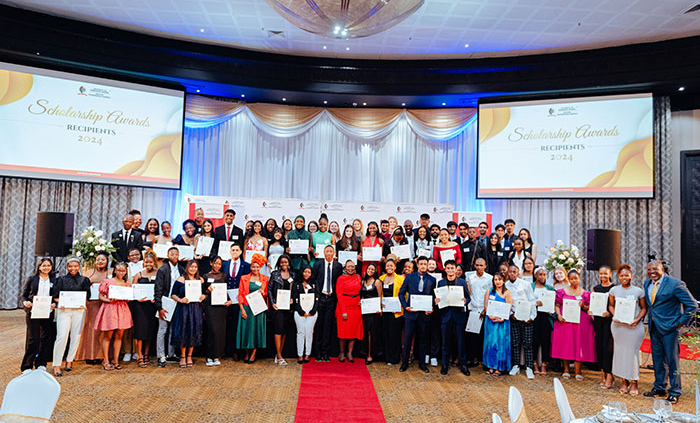
This human toll set a sombre tone throughout the 26th IEASA Annual Conference in August 2024, where the impact of the Gaza conflict on education was central. The conference included three parallel sessions, plenaries, and a keynote with a focus on solidarity, resilience and the ethical responsibilities of internationalisation practitioners.
The first session entitled “The Role Paradox: Speaking Truth to Power or Soft Diplomacy?” presented by Anisa Khan from the University of Johannesburg explored the role of internationalisation practitioners and how, through the agency we all have, we can take meaningful, decolonised, just and ethical stances that can guide partnership development and collaborations with universities and international agencies that may directly or indirectly be associated with countries or activities that infringe on the human rights and freedoms of Palestinians and other marginalised populations. The session examined the concept of academic freedom and what this means within the context of individual, institutional and collective freedoms, academic and cultural boycotts, anti-apartheid and decolonised approaches, knowledge security and normative framework approaches to partnerships with Israeli universities. Some universities are delinking research, while maintaining academic collaborations, whereas others support boycotts against Israel. Ghent University in Belgium, for instance, ended its ties with Israeli institutions, in line with the recent ruling by the International Court of Justice. The discussions emphasised the paradox of balancing diplomacy with ethical responsibilities in internationalisation.
A second critical session titled “The Impact of the Genocide in Gaza and Increased Attacks in the Occupied West Bank on Education Access and Internationalisation in Palestinian Universities” included speakers such as Amir Khalil from Birzeit University, Basri Saleh from the Palestinian Ministry of Education and Higher Education, and Amani Al-Mqadma from the Islamic University of Gaza. Chaired by Anisa Khan, this session highlighted the severe disruption to higher education and Al-Mqadma’s plea for international support, emphasising that education serves as a form of resistance and survival for Palestinians. The academics continue to educate students trapped in Gaza using their phones. Teachers and lecturers have not been paid for ten months but a presenter asked “Which is better? To spend a morning trying to teach or to spend it queuing for humanitarian aid?” They emphasised that education is their life and ended the session by telling the audience not to worry that this has been their life and they will continue to educate. Edwin Naidu’s article, “Internationalisation Experts Debate Approaches to War in Gaza,” published in the University World News on September 5, 2024, delves into how universities can balance ethics, academic freedom, and institutional responsibilities and summarises the topics covered in this session.
A third session titled “Humanising and Decolonising Pedagogy through Virtual Exchange” and chaired by Jody Felton (IES Abroad) explored how Collaborative Online International Learning (COIL) programmes can help decolonise and humanise higher education pedagogy. Divinia Jithoo (Durban University of Technology), Alia Gilbrecht (Debate Education), Huba Boshoff (Durban University of Technology) discussed the potential of virtual exchange to offer a platform for students in conflict zones like Palestine to share their experiences, challenge dominant narratives, and engage in meaningful cross-border dialogues. In this session, presenters advocated for the need to purposefully realign pedagogies to support rehumanising processes, drawing on concepts such as Paulo Freire’s Pedagogy of the Heart and Ginie Servant-Miklos’ Pedagogy of Collapse. These pedagogies could enable students to challenge dominant narratives that marginalise certain groups.
The plenary session “Higher Education, Human Rights, and the Right to Collaborate?” brought together esteemed panellists including Professor Ahmed Bawa from the University of Johannesburg, Mr. Ghaleeb Jeppie from the South African Embassy in Tokyo, Professor Reitumetse Obakeng Mabokela from the University of Illinois at Urbana-Champaign, and Dr Aldo Stroebel from the University of Mpumalanga. Chaired by Professor Ylva Rodny-Gumede from the University of Johannesburg. The session explored the intersection of higher education, human rights, and international collaboration amidst the ongoing conflict in Gaza. The discussions underscored the role of universities in promoting democracy, human rights, and equity through global partnerships and community engagement. A summary of the topics covered can be found in the University World News article: “Higher Education, Human Rights, and the Right to Collaborate”.
Addressing the conference topic of “Navigating internationalisation in challenging times” in a keynote address on the last day of the conference, the former Minister of International Relations and Cooperation, Dr Naledi Pandor, discussed the changing geo-political dynamics, the role of higher education, and need for contextualised internationalisation. Here, she was referring to the call by some scholars for diversified and decolonised curriculum, as well as a more diversified student body, programme mix, diversified academia, and multi-disciplinary approaches. Dr Pandor asked of universities: “Do we have the stamina and fire for a refocused, revisited higher education? Are institutions able to respond and resist the overbearing threat of uni-polarity?
Referring to the role of academics during apartheid, Dr Pandor noted: “Many of our institutions and our academics showed their mettle in the struggle against apartheid and held the moral high ground, while simultaneously pursuing scholarship. There is nothing unacademic about being an activist and responsive to context and also pursuing knowledge, as is your task. The two can be synthesised very effectively”. In this regard, Dr Pandor reminded us that “Justice and full enjoyment of human dignity remain a desire for Palestinians today”. Dr Pandor then proceeded to invite the internationalisation scholars, experts and practitioners to play a part: “Any role that you, in your internationalisation settings can play, through your internationalisation agenda that can assist in ensuring peace and justice is welcome” She continued: “Pursuing such an outcome is an effort in which of us should engage in”.
In a moving tribute to Dr Pandor’s efforts in promoting justice for Palestine, Dr Savo Heleta, himself a survivor of the Bosnian war, who lived in a siege situation for two years, thanked Dr Pandor for all she had done in taking a stand for the Palestinian people. He highlighted how in the conversations with Palestinians since the end of December 2023, when South Africa, under the leadership of Dr Pandor, took Israel to the International Court of Justice regarding the ongoing conflict and crimes against humanity in Gaza, they frequently highlighted that no one has ever done for the Palestinian people what South Africa has done for them – standing up for their survival and for justice. He thanked her for her leadership, dedication and hard work, and for standing up for what is right and just, even when there were consequences for doing so.
(At the time of submission of this article, Mohammed, his wife and children were still alive having survived another night of bombardment).