Edgar Rathelele, University of South Africa

Persuaded by the need for further enhancing the internationalisation drive and the place for Unisa in the work of sustainability, resourcing and global impact, the Principal and Vice-Chancellor of Unisa, Prof Puleng LenkaBula, is leading a twenty-one member delegation of the university’s epistemic communities from the academic, administrative and professional staff to an annual congress of the Times Higher Education (THE) scheduled for 10 to 13 June  2024 in Bangkok, Thailand.

Prof Puleng LenkaBula is leading a twenty-one member delegation of the university’s epistemic communities to an annual congress of the Times Higher Education in Bangkok, Thailand.

Unisa’s participation in the congress is the realisation or the culmination of the plans that started in 2023-2024 when the relationship between Unisa and THE started and began to solidify. For this reason, Unisa is one of the co-hosts for this important THE conference, focusing on sustainability in the context of the SDGs and the role of universities. 

The congress unfolding under the theme, “Uniting higher education, governments, industry and society for a sustainable future,” brought together more than 3,000 global thought leaders and innovators from academia, business industry and civil society worldwide to discuss urgent solutions to sustainability.
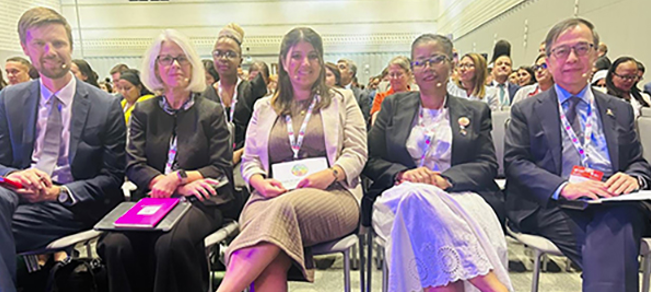
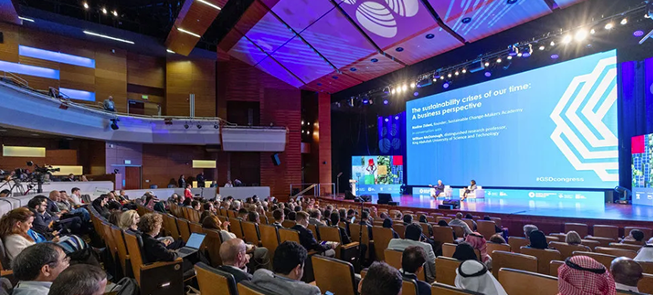
Unisa Principal and Vice-Chancellor, Prof Puleng LenkaBula prepares to take the stage to engage in a high-level panel discussion on Leadership Reflections: Building Sustainable Futures through Education. Fellow panellists accompany her, from left: John Gill, Moderator; Dawn Freshwater, Vice-Chancellor and Professor at the University of Auckland; Katre Olmez Chief, Operating Officer Ban Ki-moon Centre for Global Citizen; Alan Chan Provost and J.S. Lee Professor of Chinese Culture from the Chinese University of Hong Kong.

On 10 June 2024, the registration of members who included the Unisa delegation was followed by pre-conference sessions. The Unisa management team concluded the day with a cocktail dinner, creating a helpful space for the kick onset of negotiations for possible partnerships.

Before officially opening on 12 June 2024, different institutions and organisations set up their stands in the exhibition hall. The Unisa stand was a hit because of its visibility and strategic position at the exhibition hall, which attracted considerable attention from the conference delegates, thereby enabling the university to promote brand Unisa effectively. It is hoped that with its visibility, as well as the delegations’ active involvement at the conference and the creation of prospective cooperation with other institutions and entities, Unisa will witness an increase in international collaboration with other universities as well as business entities on the critical issue of the intersection between sustainability, SDG’s, governments, industry and society.

The engaging opening remarks by THE’s Phil Baty on the need to be optimistic amidst the challenges of sustainability amid environmental degradation were followed by a keynote delivered by Supamas Isarabhakdi, Minister of Higher Education, Science, Research and Innovation in Thailand. They were followed by a high-level panel that included Prof LenkaBula, Alan Chan, the Provost of the Chinese University of Hong Kong, Professor and Vice-Chancellor of the University of Auckland and Katre Olmez, Chief Operating Officer of the Ban Ki-moon Centre for Global Citizens. The panel efficiently handled the following theme through the modality of guided questions:


Leadership reflections, building sustainable futures through education

Challenging the conventional thinking on what higher education, governments, businesses and society must do to help society meet the United Nations’ Sustainable Development Goals (SDGs), LenkaBula pointed out that Unisa is deeply committed to sustainability through its alignment with the UN Global Compact and the annual COP reports. She also stressed the importance of a student-centred approach and appreciating the environmental realities faced by students. 

Immediately after the preceding high-level panel presentation, LenkaBula participated in yet another session, in which she persuasively addressed the topic: “Universities as champions of sustainability: Bridging local and global development initiatives.”
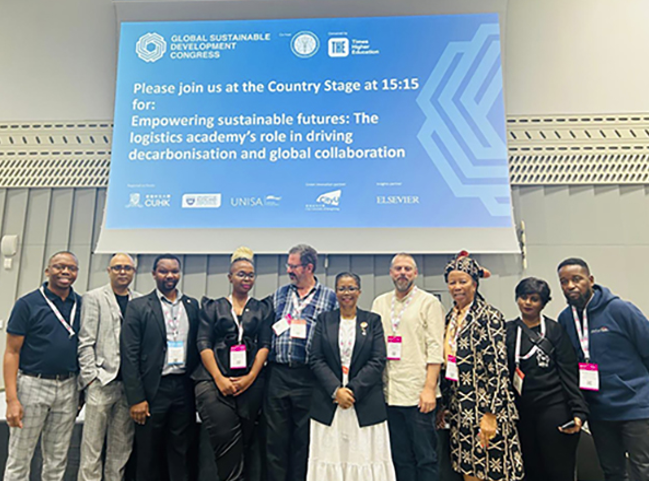
LenkaBula affirmed that Unisa’s journey is a continuous improvement with an unwavering dedication to societal betterment.

Unisa also hosted another session which addressed the topic: “Universities as champions of sustainability: Bridging local and global development initiatives”. Recognising its pivotal role in shaping Africa’s future, LenkaBula explained how Unisa has prioritised quality education, addressing inequalities and promoting gender equality through inclusive policies. She also stressed the importance of delivering impactful curriculum transformations, technology-driven teaching and learning methodologies, effective assessment strategies and committing to lifelong learning. 

Unisa is charting new frontiers through internal collaboration between colleges and academic departments, with other universities, and various stakeholders such as the government, the private sector, NGOs, and communities locally and nationally.

LenkaBula affirmed that Unisa’s journey is a continuous improvement with an unwavering dedication to societal betterment. “Our successes, recognised through numerous awards and accolades, inspire us to further our impact on Africa’s future and the global educational landscape. We look forward to sharing our experiences, learning from global peers, and contributing to the collective efforts towards a sustainable and equitable world at the GSDC 2024,” she said.

The Unisa delegation is at work in their contribution towards the success of the journey by exhibiting, participating in panel discussions and forging new relationships during the #GSDcongress2024.

Edgar Rathelele, University of South Africa

A few days ago, Unisa celebrated great news when the 2025 edition of the Quacquarelli Symonds (QS) World University Rankings listed Unisa as one of the top universities in South Africa, further assuring and cementing Unisa’s stature as a globally sustainable and competitive university. The good news has not stopped Unisa’s management, academics, and staff members in their quest to improve further and position the university as a global player and leader in the higher education space.

Image credit: Times Higher Education

To propel the university to new heights and solidify its position, esteemed delegates from Unisa will be collaborating with distinguished scholars in Thailand as the university co-hosts, together with Times Higher Education, the Global Sustainable Development Congress from 10 to 13 June 2024 in Bangkok, Thailand. The delegation, led by the Principal and Vice-Chancellor, Professor Puleng LenkaBula, includes Ms Mathabo Nakene-Mginqi, Professor Solomon Magano, Professor Matsheliso Molapo, Professor Madipoane Masenya, Dr Azwinndini Tshivhase, Dr Genevieve James, Ms Nolwazi Mwabi, Dr Moleboheng Ramulumo, Dr Thelma Louw, Professor Ashley Gunter, Dr Denzil Chetty, Mr Letlhogonolo Marumolwa, Professor Robert Tjano, Professor Christopher Enweremadu, Mr Herman Visser, Dr Khanyisile Twabu, Dr Nozipho Madzivha, Ms Sizakele Magubane and Mr Edgar Rathelele.

Members of the delegation will be playing different roles such as staffing the Unisa stall where information about the university will be shared with conference attendees, while some academics will be participating in panel discussions and presenting papers. There will also be an opportunity to market Unisa products and showcase Unisa’s signature academic projects.

Image credit: Times Higher Education

The Global Sustainable Development Congress brings together 3 000 global thought leaders and innovators to discuss urgent solutions to the sustainability emergency. It is a call to action for universities and businesses to work together towards a more sustainable future. The event will also feature the exclusive live reveal of the Times Higher Education Impact Rankings 2024. For more information, please visit Global Sustainable Development Congress 2024

Dr Carlien Jooste, Sefako Makgatho Health Sciences University

The month of May is traditionally called Africa Month across most African countries. In this month, higher education institutions and other civic entities commemorate Africa Day in one way or another. Most of the time, Africa Day is commemorated through song and dance, as well as the honouring and sharing of language, culture, and traditions.

However, the celebrations are always commemorative at heart as we remember the visionary leaders who, 61 years ago, came together with a dream of a united Africa, an Africa free from the chains of colonialism and full of hope for a brighter future. The formation of the Organization of African Unity (now known as the African Union) on May 25, 1963, marked a pivotal moment in Africa’s history, a moment when Africa’s nations stood together to forge a path towards independence, prosperity, and reconciliation.

Africa Day is thus not only a cultural celebration, but it is also a celebration of the progress the continent has made. The Africa Day theme for 2024, published by the African Union was “educate an African fit for the 21st Century: Building resilient education systems for increased access to inclusive, lifelong, quality, and relevant learning in Africa.” As an educational institution, this theme spoke to the heart of our beloved SMU, who celebrates her 10th Anniversary this year.

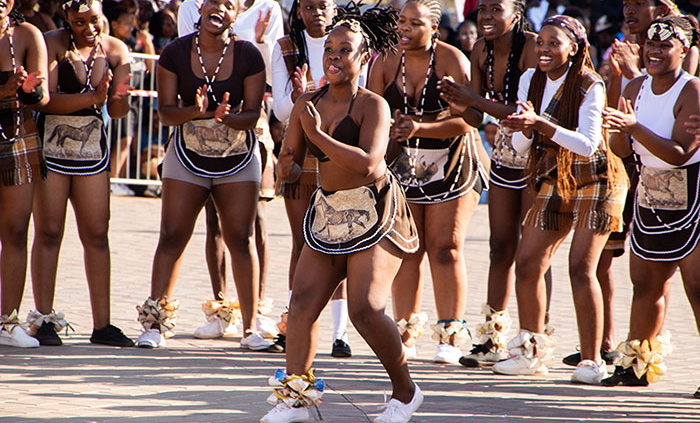
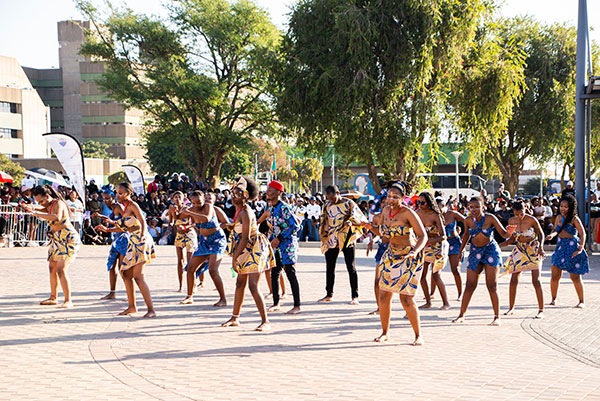
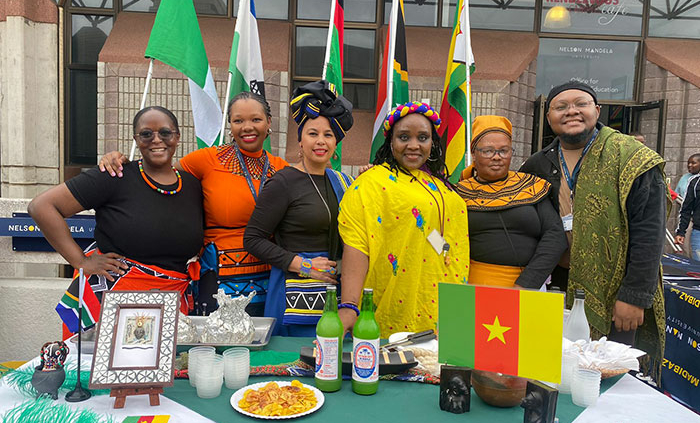
SMU thus celebrated Africa Day on the 31st of May 2024 with a joyous cultural celebration. Hosted by the Internationalisation Directorate and Advocacy and Diversity Unit of the Student Affairs Directorate, students and staff came together to commemorate and celebrate not only as proud Africans, but also as a SMU family. The day commenced at the newly updated Amphitheatre with a rousing performance by the SMU Choir and words of support from the SMU Vice-Chancellor, Prof Peter Mbati, as well as representatives from the interim Student Representative Council and the President of the SMU International Student Organisation. SMU also welcomed representatives from various High Commissions and Embassies, including the Japanese Embassy, the Kenyan High Commission and the Cameroon High Commission. After the formal part of the programme, the SMU residences hosted cultural tables as well as entertained the crowd with cultural performances.

SMU’s Africa Day celebration is a unique Internationalisation at Home activity. Each year, African countries are selected based on our international student representation on campus. Our residences then engage in a raffle to draw the country they will represent at the celebrations. International students then assist South African students in learning about their respective country and cultures, while students also visit the various High Commissions or Embassies for further knowledge sharing. The sum of their cultural knowledge sharing is then put on display at their cultural tables (where one can taste food and refreshments) and during their cultural performances.

The programme included a panel session titled “Affirmative Action: A Global Perspective”. Affirmative action seeks to promote equal opportunities for under-represented groups. Its effectiveness and potential consequences are debated globally, with different countries implementing it in various ways. The panel session aimed to offer a historical framework of affirmative action policies worldwide.

The panel session was initiated by Imara V. Dawson, the Managing Director of the Michigan Program for Advancing Cultural Transformation (M-PACT), which is funded by the National Institutes for Health Faculty Institutional Recruitment for Sustainable Transformation Initiative (NIH FIRST) and the University of Michigan (UM).

The first panelist was Karin Fischer, the author of Latitudes, a weekly newsletter that provides critical news, incisive analysis, and behind-the-scenes observations on international education. Dawson was inspired to organize the panel, after reading one of Fischer’s articles titled “The Supreme Court ruled U.S. colleges can’t use race in admissions. It’s long been banned in France,” published in Latitudes: The Chronicle of Higher Education. Fischer was invited to participate in the panel discussion and to share the various perspectives she had covered in her article, which touched on affirmative action positions in Canada, France, South Africa and Brazil. (You can subscribe to Latitudes and download the article for free here).

The second panelist was José Celso Freire Junior, associate provost for international and associate professor in computer science at São Paulo State University (UNESP) in Brazil, and President of FAUBAI—the Brazilian Association for International Education. Freire shared the Brazilian approach to affirmative action, which reserves 50% of admissions to the top Brazilian public universities for students from public high schools, prioritising those from disadvantaged backgrounds: poor, Black, Mestizo and Indigenous students.

The third panelist was Orla Quinlan, Director of the Global Engagement Division, Rhodes University; Council member and President IEASA (2019-2020), who presented the South African approaches to affirmative action in student access to higher education. It was interesting to discover that, in most countries discussed, the term affirmative action is applied to student access to higher education. In South Africa, however, affirmative action is more commonly associated with employment equity, rather than education access. Engaging with colleagues on international panels often demands consideration of the contextual nature of different terminologies and concepts. For example, to measure progress since the Apartheid years, South Africa still employs the socially constructed, racialised categories White, Indian, Coloured, and Black.  In South Africa, the term “Coloured” is commonly used as a descriptive term for a group of South Africans with a distinct cultural identity. However, in the US, “coloured” is not an acceptable descriptor, due to historical connotations, of it being used as a derogatory term to describe African Americans. The use of the term, in relation to South African policies, had to be explicitly addressed at the outset of the presentation. During the discussion, Quinlan proceeded to explain the historically disadvantaged groups in South Africa. She continued by highlighting the prioritisation of academically high-achieving students from disadvantaged backgrounds, who are eligible for NSFAS funding, as well as South Africa’s 5% quota commitments to students from neighbouring countries in the Southern African Development Community (SADC) countries.

In the discussions that followed, the panel was asked if they could ever envisage a time when affirmative action would not be needed. Quinlan responded that, in her view, “While the nature and the details of affirmative action polices might shift overtime, there will , most likely, be groups, outside of the structures that work for dominant groups, who will need policy support to have equitable access, in the foreseeable future”.  

A 2022 winner of the Mail & Guardian 200 Young South Africans award and project manager at the Endangered Wildlife Trust (EWT), UKZN doctoral graduate Dr Samantha Nicholson, heads up the IUCN SSC Cat Specialist Group’s African Lion Database – a conservation project that collects and analyses key data on the species to inform conservation-related decision-making.

IUCN SSC is the International Union for Conservation of Nature’s Special Survival Commission.

By creating a repository of reliable information, the database aims to bolster the capacity of governments and organisations to assess the impacts of their interventions.

Now Nicholson has earned a doctoral degree through UKZN for work done to assess the African lion population. Her aim is to contribute to a better understanding of the status and conservation of the iconic species and what contributes to their population declines.

‘Samantha critically assessed the current conservation status of Africa’s most iconic carnivore, the lion,’ said her supervisor Professor Rob Slotow. ‘She determined the best methods to survey them, their conservation status, how fragile different lion subpopulations are, and the perceived threats to them across their range.

‘Her work will contribute to effective and targeted conservation of declining lion populations, guided by the best available data, as is required to ensure that lions do not go extinct.’

Nicholson’s work included determining the most up-to-date estimates for lion populations and the trends for each population since the 2015 red list; confirming the most-up-to-date distribution of lions across Africa; and identifying and attempting to quantify the threats to lions across their range using survey data and anthropogenic mortality data.

She also determined the fragility of the wild lion population by investigating their ecological fragility based on factors such as population isolation, population estimate, geographic extent of the population, percentage of the population covered by protected areas, and cattle density with the geographic extent of the lion population and intensity of edge effects.

She also determined their socio-economic fragility using factors such as Gross Domestic Production (GDP) per capita based on Purchasing Power Parity, political stability, human development index, GINI index, human population density and human population growth rate.

Nicholson’s research offers valuable insights into the species’ status and provides innovative recommendations that could enhance the management of lions across their range. This includes conservation interventions that target specific threats while incorporating socio-political and ecological factors which contribute to a population’s fragility. 

‘As lions remain listed as “vulnerable” and lion populations continue to decline, I recommend that the regional strategies be updated based on improved data and information available,’ she said.

‘To ensure that population data gathered is reliable and robust, harmonised survey methods need to be developed and implemented across the species range, especially in areas where survey data are poor or lacking.

‘In a world where we are losing species at an unprecedented rate, effective and targeted conservation is needed, that is guided by the best available data, to ensure that the lion isn’t one of those species that disappears,’ said Nicholson.

The 34-year-old has always been passionate about carnivore conservation and chose to do a PhD both as a career challenge and to grow as a conservation scientist. ‘In 2018, I took up a new career role focusing on the conservation and status of one of Africa’s most iconic cats: the lion. While working on this project, it was clear that there were research gaps and through my work I aimed to fill them,’ she said.

After officially meeting Slotow at a Lion Management Forum Meeting in 2019 they discussed the possibility of her doing a PhD through UKZN with him as supervisor owing to his experience and expertise in large mammal research.

Nicholson, who works at the EWT as a senior carnivore scientist and manager of the African Lion Database, plans to continue working in carnivore conservation with a focus on filling critical research gaps in an effort to contribute to their effective conservation.

Nicholson said that tackling a PhD on top of a full-time job and becoming a new mother had not been easy, ‘especially with the realisation that the insurmountable amount of pressure would never ease and the workload would never get lighter.

‘With the unwavering support, love and strength from my husband, family and friends, I made it to the light at the end of the tunnel and was able to proudly hand in my PhD,’ she said. ‘Never say no to something that you can learn from and that could provide opportunities to grow in your career.’

She thanked Slotow for his invaluable advice and guidance that helped her develop as a scientist; Dr Hans Bauer, her mentor at the IUCN SSC Cat Specialist Group’s African Lion Database, and Dr Lizanne Roxburgh, her manager at the EWT and co-supervisor for her PhD.

With her doctoral studies done and dusted, Nicholson hopes to be able to spend more time with her husband and lively three-year-old daughter as well as enjoy her hobbies of travelling, wildlife photography and reading.

‘Never stop learning!’ said Nicholson.

Words: Sally Frost

Photograph: Sethu Dlamini and Supplied

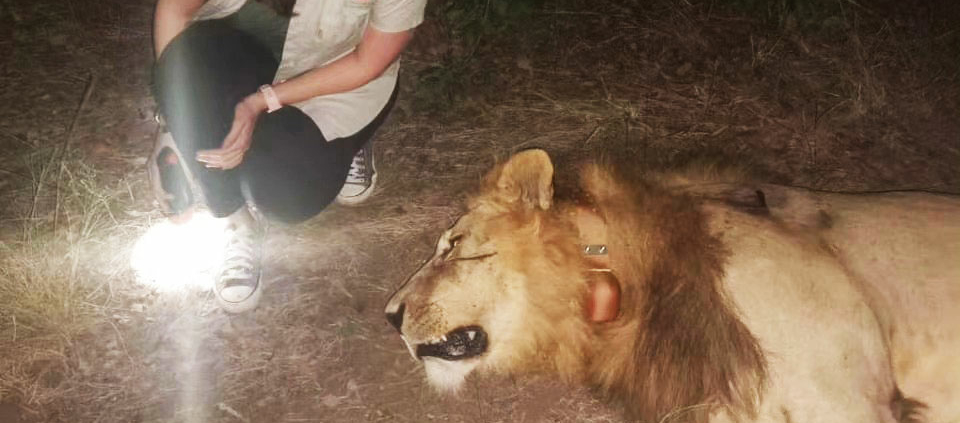
Caption: UKZN’s Dr Samantha Nicholson at Graduation, and on an Endangered Wildlife Trust lion collaring project in South Africa’s Kruger National Park.

Published 10 May 2024

When Ms Katelyn Johnson registered for a BSc degree in Civil Engineering at UKZN way back in 2009 she was the first and only Coloured woman to do so.

Fast forward to today, and she has now just become the first Coloured South African female to graduate with a PhD in Civil Engineering at the University. 

Having worked as a civil engineer for four years with some experience in flood management, Dr Johnson completed her MSc in Civil Engineering part-time before starting postgraduate studies through the Centre for Water Resources Research (CWRR) in the School of Agricultural, Earth and Environmental Sciences.

Of particular interest to her were the research topics in the National Flood Studies Programme led by her supervisor, centre director Professor Jeff Smithers. 

Johnson’s PhD research involved estimating extreme rainfalls for guidance when designing and constructing hydraulic structures such as dams, culverts and stormwater drainage to withstand flood events under a changing climate. 

‘Katelyn developed new regionalised methods for the estimation of extreme design rainfall and Probable Maximum Precipitation events in South Africa, which are required for the design and flood risk assessment of hydraulic structures,’ said Smithers. ‘She investigated and developed methods to account for climate change on these values. Trends in observed rainfall data were investigated and new knowledge on the performance of potential climate drivers in non-stationary design rainfall models was generated in order to account for the potential impacts of climate change.’ 

Johnson said she was motivated by her experience in industry working with stormwater management design manuals which led her to want to understand how the design guidelines were developed and could be improved. 

‘With the magnitude and frequency of extreme rainfall and flood events changing in South Africa and globally, it is important to understand the impact on existing infrastructure as well as the design of new infrastructure,’ she said. 

Johnson has worked as a lecturer in UKZN’s School of Engineering specialising in fluid mechanics and engineering hydrology since 2017. With her PhD behind her, she plans to continue in academia, focusing on student engagement in civil engineering and hydrology, thus helping to mould the next generation of practitioners and academics. 

In her spare time, she enjoys watercolour painting and teaches yoga. 

She thanked Professor Derek Stretch for supporting her in her transition from industry back to academia; Smithers who guided and motivated her as a researcher and young academic; and her two co-supervisors, Professor Roland Schulze and Dr Thomas Kjeldsen who were gentle guides along her journey. Dr Elena Friedrich was a compassionate mentor. 

‘I would also like to thank my mother who has always encouraged my academic aspirations,’ said Johnson. 

Words: Sally Frost

Photograph: Sethu Dlamini

Caption: Dr Katelyn Johnson celebrates being UKZN’s first Coloured female Civil Engineering PhD graduate.

Published 10 May 2024

Orla Quinlan, Director of Global Engagement

Friday 31 May, the last day of Africa Month coincided with the 120th birthday of Rhodes University. Activities in May to celebrate Africa month included public lectures, seminars, panel discussions, a conference, a colloquium, a book launch, interactive activities with students, a photo shoot celebrating cultural diversity, education campaigns, a postgraduate funding fair; all demonstrating Rhodes University’s continuing commitment to a vibrant intellectual life on campus.

Public lectures hosted during Africa month included:

  1. Culture, language, and Africa’s future: Emeritus Prof. Kwesi Kwaa Prah, a renowned sociologist and linguist, delivered this first lecture. He has driven Pan-African language development projects across the continent through the Centre of Advanced Studies of African Society, which he founded.
  2. Decolonising the Southern African subject:

The second lecture was by Zimbabwean-born award-winning novelist and filmmaker, Tsitsi Dangarembga, titled “Decolonising the Southern African Subject: What We Are Up Against and How to Push Back at it.” This event was held in collaboration with the Amazwi South African Museum of Literature. Dangarembga’s week-long visit included a conversation with Prof Lynda Spencer and Dr Joseph Kwanya from the Department of Literary Studies, and a discussion with Prof Dion Nkomo on translating her work, “Nervous Conditions,” into Shona.

  • Eroding democratic institutions and the future of knowledge:

Advocate Vusi Pikoli, the former National Director of Public Prosecutions, gave the third lecture on “The Eroding of Democratic Institutions and the Future of Knowledge,” marking 30 years of democracy in South Africa. This lecture took place at the Albany Museum.

Seminars, Conferences & Colloquiums:

Dr Andrews Atta-Asamoah, head of the African Peace and Security Governance Programme at the Institute for Security Studies (ISS) and Research Associate at the Department of Political and International Studies, gave a lunchtime seminar on “African Union’s Evolution in Two Decades: Achievements, Challenges, and Future Prospects.”

Rhodes University Community Engagement hosted a dynamic conference at the Settlers Monument The conference south to  contribute to the knowledge base concerning community engagement, examining the dynamic between community, university, and society in South Africa and internationally

A two-day Colloquium on Sustainability brought together researchers from every faculty to share insights and ideas, shaping a sustainable RU120 legacy.

Book launch:

Prof Pedro Tabensky, Director of the Allan Gray Centre for Leadership Ethics, in dialogue with Dr Thando Njovane, launched his book “Camus and Fanon on the Algerian Question” (Routledge 2023) at the Amazwi Museum of Literature. This is the first book to systematically compare the philosophies of Albert Camus and Frantz Fanon, demonstrating how their ethical, political, and psychological outlooks can further our understanding of justice in the face of deep power imbalances.

Student engagement activities:

Earlier in the month, before undergraduate students began SWOT week preparations for end-of-semester exams, the Global Engagement Division (GED) supported the SRC in hosting an outdoor international extravaganza games day. Activities included a range of races, team games, an international quiz, international cuisine along with face-painting and music.

On “Purple Thursday,” 23 May, an interactive activity outside the library explored the African Union theme for 2024 asking the question, “What does a 21st-century education mean to Rhodes University students?”. GED provided exam treats for participating students.

In collaboration with the Centre for Postgraduate Studies (CPGS), GED supported a panel of international staff and students, who shared their journeys to Rhodes University, discussing the importance of an international component in any university.

Meanwhile, student members of the Black Lawyers Association organized a panel discussion on the legal aspects of the South African case brought to the International Court of Justice earlier this year.

Postgraduate Funding Fair and awareness campaigns:

A successful postgraduate funding fair, held on Drostdy lawn, invited national and international partners to share funding opportunities with students from Rhodes University and Nelson Mandela University.

Educational and awareness-raising campaigns ran throughout the month, including information about the African Union’s history, vision, and objectives, interesting facts about African countries, a “Did you know?” campaign on African high achievers, and profiles of international students.

Cultural diversity celebration:

To celebrate our cultural diversity, staff and postdocs were invited to dress in informal or formal contemporary African attire for a professional photoshoot in celebration of Africa Day itself.

Rhodes Music Radio RMR broadcast news of the month’s activities on Africa Day, in an interview with eh Director of Global Engagement, Ms Orla Quinlan.

External engagements:

The Rhodes University community also engaged externally with several networks concerned with the Sustainable Development Goals and Agenda 2063. Rhodes University’s Vice Chancellor, Prof Sizwe Mabizela, Director of Global Engagement, Ms Orla Quinlan, and eight researchers attended the South African Swedish University Forum (SASUF) Research and Innovation week. They participated in workshops, satellite events, coordination meetings, and leadership discussions before a three-day Sustainability Forum hosted by Lund, Malmo, and Swedish University of Agricultural Sciences (SLU) in three different towns in Southern Sweden.

The VC attended the African Research Universities Alliance (ARUA) annual meeting in Pretoria. ARUA joined with the Worldwide Universities Network (WUN), jointly representing nearly 50 leading universities on six continents. The main agenda was equitable research collaboration to tackle global challenges, with human capacity development emerging as a top priority.

The Director of Global Engagement attended the AGM of the Southern African Regional Universities Association (SARUA), where members approved the strategic plan, the new Constitution, elected a new Board, and approved an official Memorandum of Understanding between the South African Development Community (SADC) and SARUA.

Prof Nomusa Dlodlo, Rhodes University’s representative in the Grow Green Africa (Gr2A) intra-Africa mobility project, met with climate change specialists for a curriculum development workshop from 27-29 May at the Kansanshi Royal Hotel in Solwezi, Zambia. The consortium members include the Copperbelt University in Zambia, Rhodes University in South Africa, the National University of Science and Technology in Zimbabwe, Namibia University of Science and Technology in Namibia, the University of Eswatini in Eswatini, and the University of Turku in Finland.

While Africa Month is celebrated every May, this year was especially significant, as it overlapped with the RU120 celebrations. As Africa Month ended on Rhodes University’s 120th birthday,

Rhodes University, established in 1904, has a rich history that reflects its evolving role in South African society. In its early years, the institution maintained a strict policy of political neutrality, restricting staff and students from engaging in political activities. This stance shaped the university’s culture and approach to political discourse, emphasising unbiased, comprehensive analysis to foster informed decision-making.

The significance of this historical context is profound, especially as Rhodes University marks its 120th anniversary. This milestone provides an opportunity to reflect on the university’s journey from political abstinence to becoming a leading voice in national debates, especially during pivotal moments like the 2024 South African elections.

Rhodes University staff and academics played a crucial role in the 2024 South African elections, engaging in various forums and public debates to discuss the political landscape and its implications. This involvement highlighted the importance of academic institutions in facilitating discussions on national issues and engaging the public in critical electoral matters.

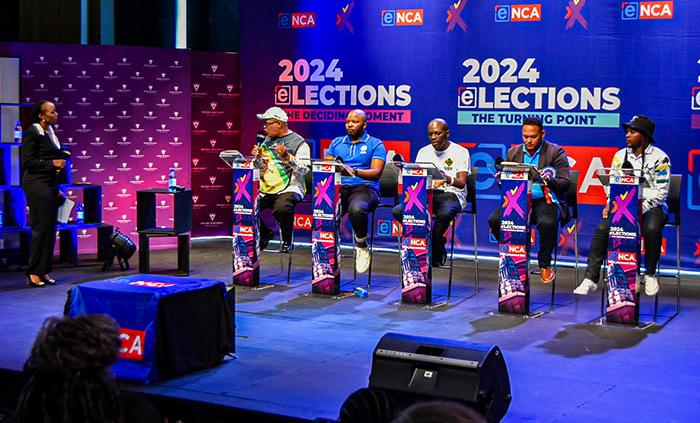
One notable event was the eNCA Elections Town Hall Debate, moderated by Masego Rahlaga, on the 21st of April 2024. The debate focused on significant issues such as corruption, unemployment, and load shedding, significantly impacting voter sentiment. This event underscored the role of Rhodes University in fostering transparent and accountable discussions about political leadership and governance.

Rhodes University’s SRC President, Simphiwe Mnyande, challenged political representatives on the higher education crisis, particularly funding and the functionality of NSFAS. The debate showcased the diverse perspectives from various political parties and emphasised the need for effective governance and accountability.

Masixole Booi, a lecturer at Rhodes University, participated in a masterclass on Radio 702, discussing the 2024 elections. This series, hosted by Relebogile Mabotja, aimed to educate and engage listeners on critical electoral issues, such as the ballot paper, independent candidates, and the broader political context. Booi’s insights were crucial in helping the public understand the complexities of the electoral process and the significance of informed voting.

Listeners can access the episodes of this masterclass on platforms such as Apple Podcasts and Omny.fm. These platforms provide detailed descriptions and options to stream or download the episodes, making it convenient for users to follow the series and gain insights at their own pace​.

Featured on Daily Maverick, “Expectations of Xenophobia, Cybermisogyny, and Disinformation“, written by Emeritus Professor Guy Berger, discusses anticipated issues in the run-up to the South African elections – including the spread of disinformation, xenophobia, and cybermisogyny. It features contributions from various academics, including those from Rhodes University.

In another article, “Hate speech and disinformation in South Africa’s elections: Big Tech makes it tough to monitor social media,” Prof Berger delves into the challenges faced in monitoring social media during the South African elections. It highlights researchers’ difficulty due to limited access to crucial data from major tech companies that often do not provide the necessary data, making it hard for researchers to track and analyse disinformation and hate speech effectively.

Interestingly, Dr. Rene Oosthuizen from Rhodes University’s Community Engagement Division discussed the impact of water and electricity challenges in South Africa, which has driven communities and institutions to seek alternative sources of supply. The education sector, including Rhodes University, adopts eco-friendly initiatives and implements water conservation and management strategies. This approach reflects a broader commitment to sustainability, aiming to address resource shortages and promote environmental responsibility.

 eNCA Interview

 City Press Article

Media Coverage Highlights

  • eNCA Elections Town Hall Debate: This debate featured high-energy discussions on critical electoral issues, with significant participation from Rhodes University experts and SRC members.
  • Masterclass on Radio 702: Masixole Booi’s participation in this series provided in-depth analysis and voter education, reaching a broad audience through a prominent media platform.
  • Daily Maverick and Business Live Articles: These articles featured expert analysis from Rhodes University scholars on election disinformation, voter behaviour, and political party funding, emphasising the importance of transparency in the electoral process.
  • Newzroom Afrika Workers’ Day and Sustainability Initiatives: Discussions on Rhodes University’s eco-friendly initiatives highlighted the institution’s commitment to social and environmental responsibility.

Rhodes University’s active participation in the 2024 South African elections exemplifies its transformation from a politically neutral institution to a leading voice in the national discourse. The media coverage and expert analysis Rhodes University scholars provided were crucial in promoting transparency, accountability, and informed voting. As Rhodes University celebrates #RU120, its legacy of fostering critical, unbiased analysis inspires civic duty and engagement, reflecting the institution’s enduring commitment to shaping a better future for South Africa.

Anele Mngadi and Calton Mupande, International Office Staff, Nelson Mandela University

Nelson Mandela University’s International Office (MIO) collaboratively organised and hosted various week-long activities to acknowledge, recognise and celebrate Africa’s rich cultural heritage and diversity. These events included a symposium, seminar, a silent protest to raise awareness of the war in the Democratic Republic in Congo (DRC) and Africa Day Arts Festival on May 24, filled arts and crafts, traditional food, traditional dances, traditional attire exhibitions, music and entertainment. This was a build up to Africa Day, 25 May that is celebrated annually. Africa Day is about the commemoration of the founding of African Union (formerly Organisation of  African Unity founded on 25 May 1963 as well as the continent’s successes and aspirations for the present and the future. This year’s theme is ‘Education Fit for the 21st Century’.

The higher education sector has an important role to embrace and promote diversity in a world where some countries are increasingly leaning to far right and left and adopting nationalistic tendencies. In  Africa, a continent that still bears scars of the past (colonization), neo-colonization and divisions based on tribe and nationality as well as underdevelopment, a lack of appreciation of diversity and cultures is often glaring. The International Office at Nelson Mandela University together with different stakeholders in advancing the university’s internationalization  and community engagement agenda hosted educative initiatives that not only entertained high school and university students but also the broadened the society’s understanding of diversity on the continent.

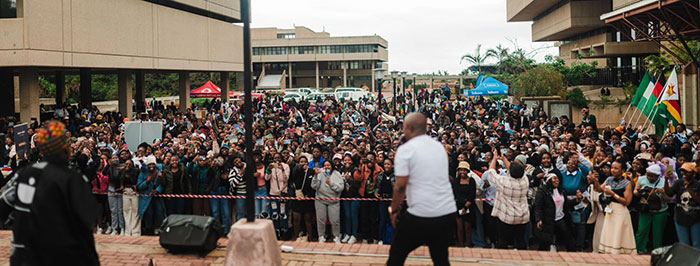
Amongst the weeklong activities, the Africa Day Arts Festival hosted by Mandela International Office in collaboration with Madibaz Radio and the department of Arts and Culture brought together South African and International students as well as international residents based in Gqeberha through arts and craft, traditional food and attires exhibitions as well as musical entertainment. Students and the broader community we treated to a tapestry of traditional cuisine from various provinces in South Africa, Ghana, Nigeria and  Eritrea. Furthermore, Music and dance by students and the acapella outfit, ‘The Soil’ captivated the crowd. The ability of Nelson Mandela University to work collaboratively with the community demonstrates its embeddedness in and the vision to serve the society and promote tolerance, appreciation of diversity and the richness of the African continent. Universities ought to be open to the broader society and foster formal and informal education.

Besides the Africa Day Arts Festival, Mandela International Office and the  Centre for the Advancement of No-Racialism and Democracy hosted the inaugural ‘Africa Month Symposium’ which highlighted diverse perspectives on education on the continent. The keynote address was delivered by Prof Kwesi Kwaa Prah. In addition, MIO hosted a seminar titled: ‘Towards a Borderless Afrika-Implications for Political and Socio-Economic Matters. A Pan-Afrikanist Perspective’. The symposium’s speakers offered different perspectives and engaged on opportunities and potential challenges of a borderless Africa. The seminar attracted audience from Phakamisa High School and activist groups from Kariega and Bayland. Lastly, a day was allocated to the #FreeCongo and #StandWithDRC movement to expose the silent genocide and humanitarian crisis that is underway in some parts of the DRC.

The Central University of Technology, Free State (CUT) hosted a delegation from the High Commission of the Republic of Kenya to discuss possible areas of collaboration. The objective was to strengthen the bonds between the university and Kenyan universities and explore academic partnership opportunities.

This visit resulted from a reciprocal visit by a CUT delegation to esteemed higher education institutions in Kenya. Notably, the discussion surrounding integrating the Swahili language into the Department of Basic Education Curriculum in South Africa was a major outcome of these engagements. Both parties are firmly committed to this endeavour, recognising the importance of linguistic diversity and cultural exchange. CUT’s Faculty of Humanities is a central driver for this initiative to train educators in Swahili and develop curriculum materials to support its inclusion in the curriculum.

Article 5. Mr Rulofs Makokha, First Counsellor, Prof. Pamela Dube, CUT Vice-Chancellor and Principal, Mr Adan Ibrahim, Education Attaché and Prof. Alfred Ngowi, Deputy Vice-Chancellor: Research Innovation and Engagement.